
I built a gamified cleaning app for myself in July, used it hard for six days, then stopped opening it. The app runs fine. The trouble is logging a chore was a second chore, and it paid me nothing back for the extra tap. Every gamified app I still use hands me something new each time I open it. This one handed me the same list, every single day.

The morning I’d rather have just cleaned
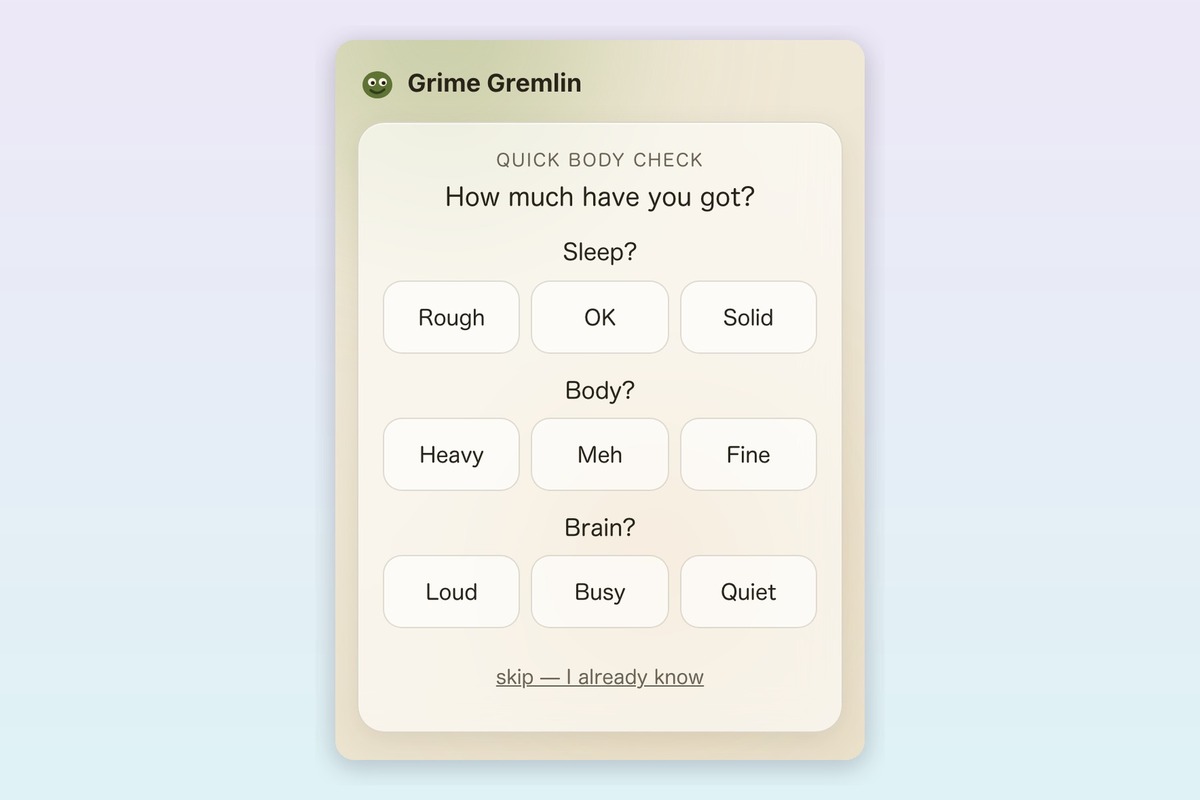
It’s called Grime Gremlin. A gremlin named the Scum squats in whichever room is worst, you answer three taps about how much energy you’ve got, and it gives you one small task sized to your answer. On paper it’s built the way I like to work: tiny doable steps, never the whole list at once. It’s how I get started at all.
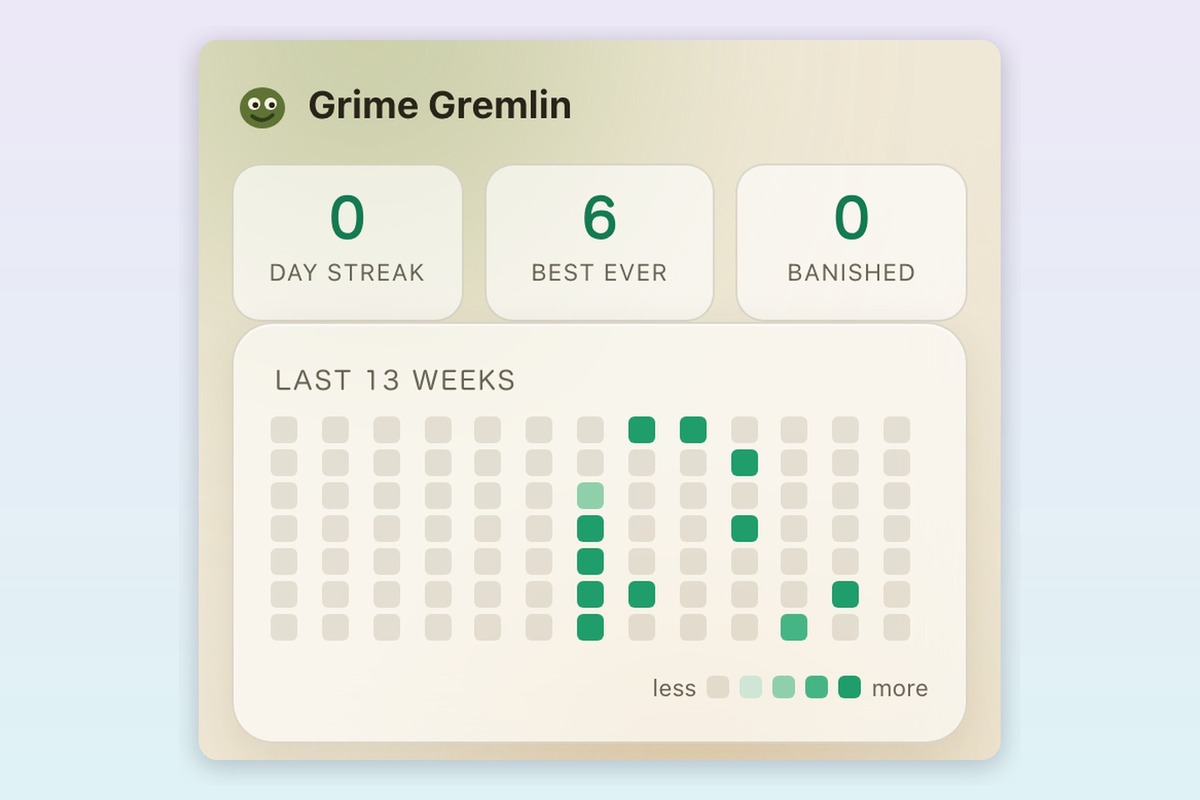
Six days straight out of the gate. Then a gap, then a Saturday where I knocked out forty tasks in one sitting, then longer gaps. Then a morning in mid-August where I opened it, looked at it, and closed it without touching anything. I haven’t opened it since.
My house is fine, by the way. I’ve been cleaning the whole time. I just stopped telling the app about it.
What the app’s own numbers say
I pulled the real data instead of guessing, because guessing about your own habits is how you write a comforting post instead of a true one.
| What I measured | The number |
|---|---|
| Days with any activity, July 8 to August 22 | 12 out of 46 |
| Best streak ever | 6 days, my first week |
| Tasks completed, all time | about 167 |
| How many landed on just two days | 76 |
| Rooms cleared of the Scum, all time | 0 |
| Last time I logged anything | August 15 |
Two days carry almost half the total. I clean in bursts, usually when someone’s coming over. The app was built around a daily streak, so my real pattern showed up as failure every week.
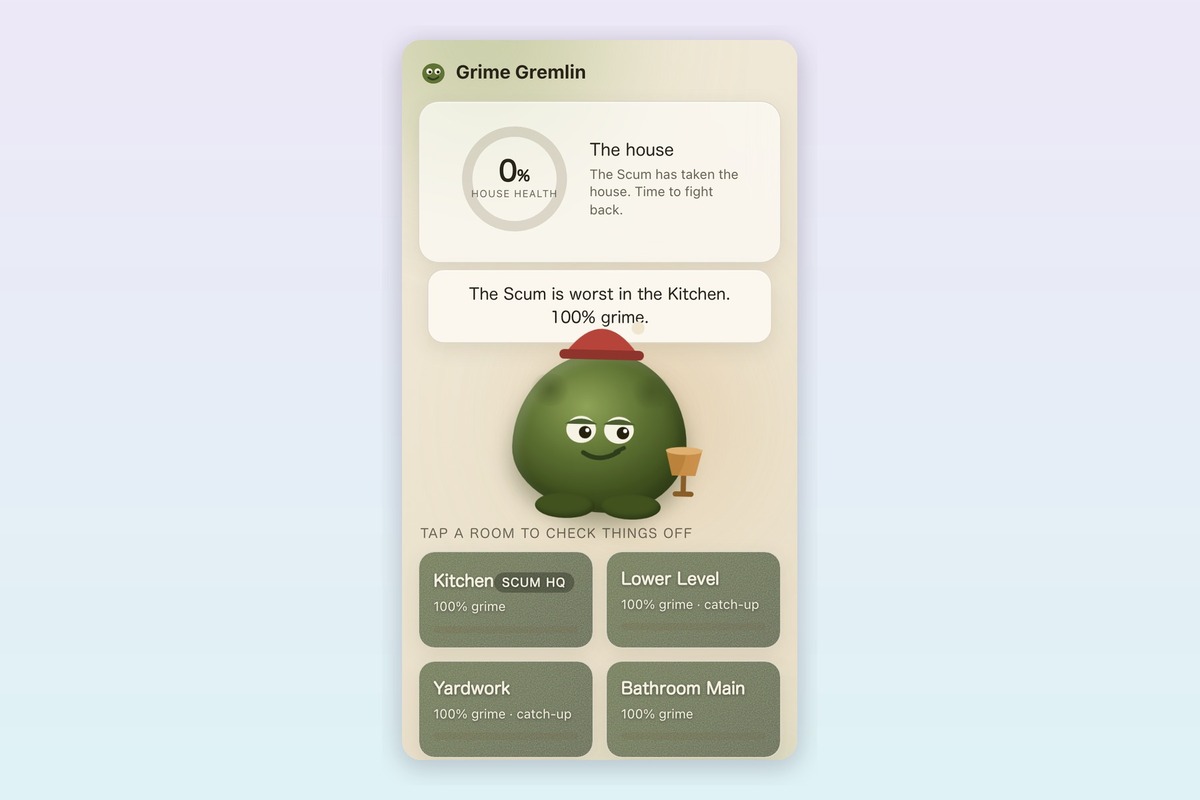
One thing to be clear about, because the next screenshot looks alarming. Every room reads 100 percent grime. My house is not at 100 percent grime. The app is, because the app only knows what I type into it.
Why doesn’t a gamified cleaning app stick?
Because logging the chore costs more than the game pays back. The cleaning already happened, with my hands full and my phone in another room. Going to find it afterward to tap a button is a separate task, and the reward for the second task was a number going down slightly.
Habit apps get this right by accident. Tapping the habit is the activity, so there’s no gap between doing the thing and recording it. No gap, no tax.
What do the apps that stick do differently?
They make something new every time. A new plant, a new fish, a new headstone. I open them and there’s a thing there I made by doing something real.
| App | What logging costs | What I get back | Still using it |
|---|---|---|---|
| Dopamine Dealer | One tap, and the tap is the habit | A streak and a hit of colour | Yes, months in |
| Emergency Fund Aquarium | Entering a deposit I already made | A new fish in the tank | Yes |
| Side Hustle Garden | Logging a hustle I’m already running | A plant grows | Yes |
| Subscription Graveyard | Adding a subscription I killed | A headstone with a name on it | Yes |
| Grime Gremlin | Finding my phone after cleaning | The same list, minus one item | No |
Every row above the last one produces an object. The bottom row produces a slightly smaller number. I never noticed the pattern until one app broke it.
What was actually broken in the code?
Two things, and I only found them digging for this post.
Every task carries a staleness score capped at 100. I bulk loaded about 247 tasks across 11 rooms in July, none had ever been done, so they all sat at exactly 100. Tied. The daily menu broke the tie using plain list order, so it served the same tasks in the same order forever. My complaint about repetition wasn’t a mood. It was the sort function.
The second is worse. Rooms regrow grime on a timer, and my kitchen regrows 40 points a day while one task removes 8 to 25. On a low-energy day, doing exactly what the app asked still lost ground. Clearing a room outright needed roughly ten kitchen tasks inside one day, which is why my cleared-room counter says 0 after 167 tasks.
When should you stop tweaking a failed app?
I caught myself planning fixes. Randomize the sort, rebalance the decay, make each clean produce something I keep. A day of work, give or take.
I’m not doing it. It’s a dud, and it’s fine to have a dud. Every one of these apps was a productivity tool and a practice run at once, built while I was still learning, and I test on myself before anything goes out to other people. Some tests come back negative. Walking away from a build I still like the idea of is the harder skill, and it’s the one I needed here.
The tiny-doable-steps method wasn’t wrong either. Grime Gremlin does it faithfully. It just wasn’t enough on its own, and I find that more interesting than a tidy fix would’ve been. I still think shrinking the task to fit the day is the right instinct. It just needs to hand you something at the end.
Frequently asked questions
Do gamified cleaning apps work for ADHD?
Sometimes, but the game has to sit on top of the work rather than beside it. If you have to stop, find your phone, and record what you did, you’ve added a task to a job you were already avoiding. Apps where the tap itself is the action survive far longer.
Why did the streak feature backfire?
Streaks reward daily consistency, and I clean in bursts. Two days accounted for 76 of about 167 total tasks. A daily streak reads that pattern as failing six days out of seven, so the scoreboard punished the behaviour I actually have.
Should you rebuild an app you stopped using?
Only if you know why you stopped and the fix targets that reason. A day of work would fix my sort order and my decay math, and I still passed, because neither one fixes the tap I didn’t want to make.
How can you tell if an app will stick before you build it?
Ask what the person holds at the end of a session. A new plant, a saved entry, a pattern they couldn’t see before. If the answer is a number moving slightly, the app is a scoreboard, and scoreboards need a game underneath them.
Try it yourself
If you’re building something for your own brain, run one check before writing any code: what does the person walk away holding? An app that only records is asking a favour every time it opens. An app that makes something is giving you a reason. Grime Gremlin asked, and I stopped answering.
A tool I built
Energy Battery
Log your energy through the day and watch your battery fill, so you can see what actually charges you and what drains you.
Find your spark →I run an affiliate program on the tools I build. Approved affiliates earn 20% on what their referrals pay, for up to a year. US only for now. See the program →
Related reading
- How I Track What I Actually Got Done Without Logging It
- How to Organize Screenshots You Save and Never Open Again
- What a Claude Code Skill Is, and How to Make One
Subscribe if you’re not already on the list. The next few builds are ones I’m still using, and I’ll tell you when one of those goes sideways too.